

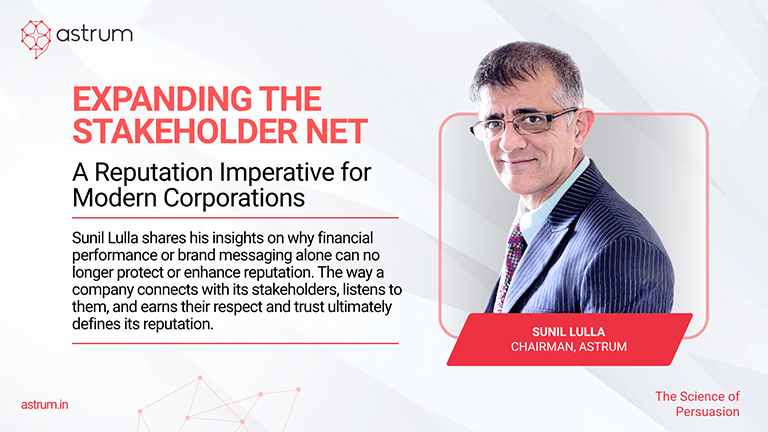
Today, corporate reputation, regardless of a company’s size or industry, is under constant scrutiny, driven by rapid information flows, extensive social media, and rising societal expectations. Financial performance or brand messaging alone can no longer protect or enhance reputation. In fact, it is built and tested through how a company engages with and responds to its stakeholders.
Investors, regulators, employees, communities, partners, activists, and even digital influencers are not a theoretical concept confined to a company’s annual report; they are the people and institutions that shape outcomes every single day. The way a company connects with them, listens to them, and earns their respect and trust ultimately defines its reputation.
For Boards and leadership teams, this makes it imperative to expand and deepen stakeholder networks. Doing so enables organisations to anticipate risks, navigate uncertainty, and build long-term value.
Identifying and Mapping Stakeholders: The Bedrock of Reputation Management
A company’s reputation is only as strong as its understanding of who matters, and why. Stakeholder identification and mapping form the foundation of effective engagement and reputation resilience.
The Board plays a central role in ensuring stakeholders are identified not merely by visibility or power, but by relevance to long-term value creation, risk exposure, and societal impact. This requires a structured, deliberate approach.
Cross-functional stakeholder identification
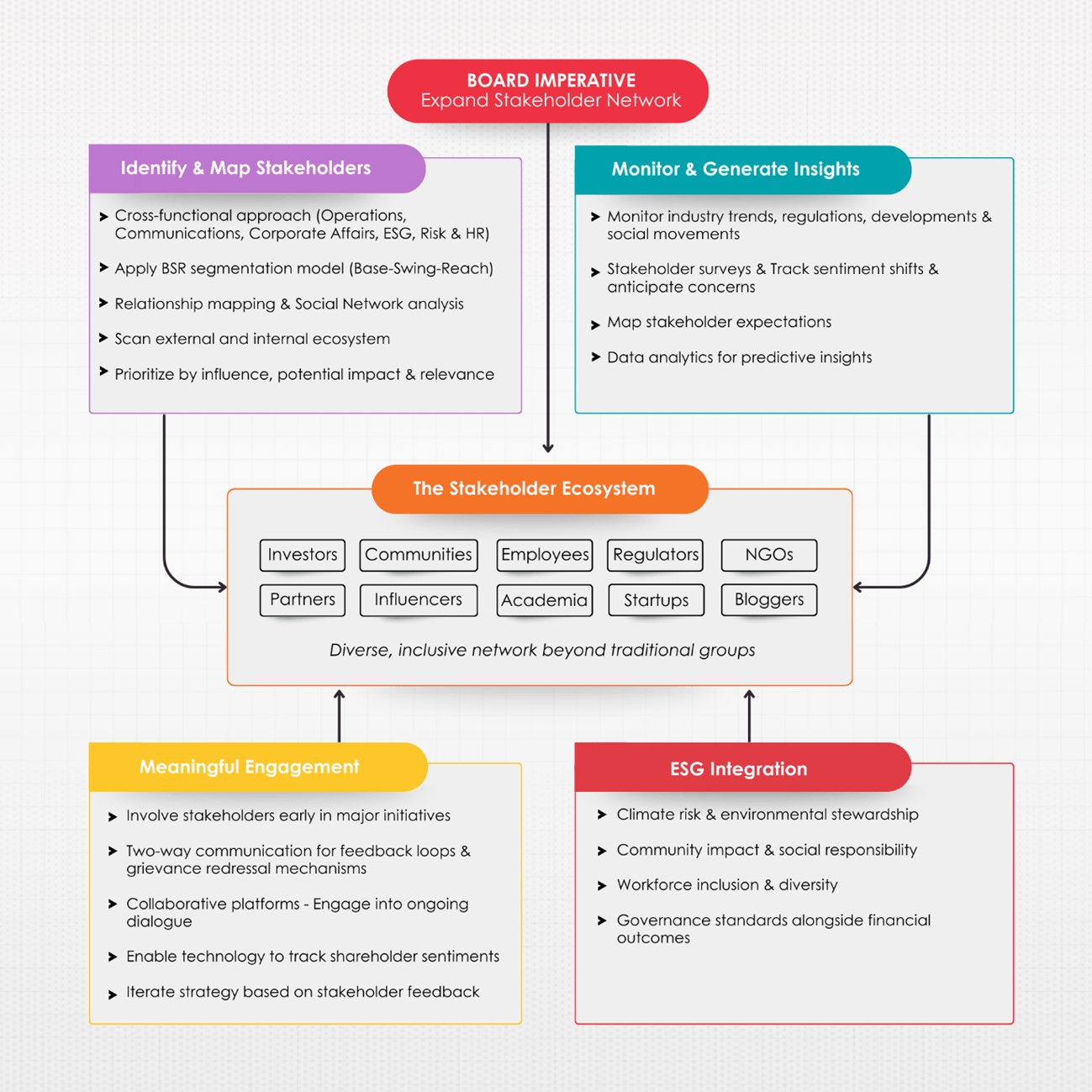
Stakeholder identification should never be siloed or purely top-down. Boards should mandate a cross-functional approach involving operations, communications, corporate affairs, ESG, risk, and Human Resources. This diversity of perspectives helps surface indirect yet influential stakeholders—such as community leaders, policy influencers, supply-chain partners, or advocacy groups—whose views may significantly affect reputation over time.
Generating insights to inform engagement
Qualitative and quantitative tools, such as stakeholder registers, structured surveys, and internal workshops, provide valuable insights into stakeholder expectations and motivations. Take for instance, Astrum, India’s leading reputation management advisory company, which uses Base–Swing–Reach (BSR) segmentation model[1] to map stakeholders from advocates to adversaries, enabling focused and informed engagement. Such tools help assess both stakeholder influence and interest, allowing Boards to prioritise engagement more effectively.
Relationship and network mapping
Stakeholders do not operate in isolation. Relationship mapping and social network analysis help visualise connections, alliances, and interdependencies between stakeholder groups. Recognising these linkages allows organisations to anticipate how influence or sentiment may travel—particularly during periods of crisis or change.
Scanning the external environment and internal ecosystem
Boards must remain attuned to industry trends, regulatory developments, and social movements, while also recognising employees and leadership teams as critical internal stakeholders who shape external perceptions. Regular review of both external and internal stakeholder dynamics is essential.
Effective prioritisation
Mapping alone is insufficient. Boards must prioritise stakeholders based on influence, potential impact, and relevance to organisational objectives. While regulators, investors, and key partners often require sustained engagement, long-term value comes from maintaining balanced attention across all stakeholder groups—not just the most vocal.
From Transactional Contact to Meaningful Engagement
Stakeholder identification and mapping are not one-time exercises. As internal priorities and external dynamics evolve, so must engagement strategies. More importantly, reputation is shaped not by contact but by the quality of engagement.
Early involvement
Engaging stakeholders early in major initiatives, rather than after decisions are made, signals openness and respect. It reduces resistance, improves alignment, and builds trust from the outset.
Tailored, two-way communication
Stakeholders differ in expectations, influence, and information needs. Effective reputation management, therefore, requires customised communication by channel, language, and depth. Equally important is listening. Boards must ensure mechanisms for feedback, grievance redressal, and idea-sharing—and that feedback loops are visibly closed.
Collaborative platforms
Sustained engagement requires continuity. Advisory councils, stakeholder forums, digital platforms, and issue-specific working groups turn engagement into ongoing dialogue. These platforms deepen relationships and serve as early warning systems for reputational risk.
Technology as an enabler
Data analytics and digital tools allow organisations to track stakeholder sentiment, anticipate concerns, and personalise engagement at scale. When used well, technology shifts engagement from reactive to predictive.
ESG as an engagement dimension
Environmental, Social, and Governance considerations increasingly shape how stakeholders assess corporate credibility and intent. Treating ESG as a core engagement dimension, rather than a reporting obligation, ensures conversations extend beyond short-term performance to long-term responsibility. For Boards, this means engaging stakeholders on climate risk, community impact, workforce inclusion, and governance standards alongside financial outcomes.
Expanding the Stakeholder Ecosystem
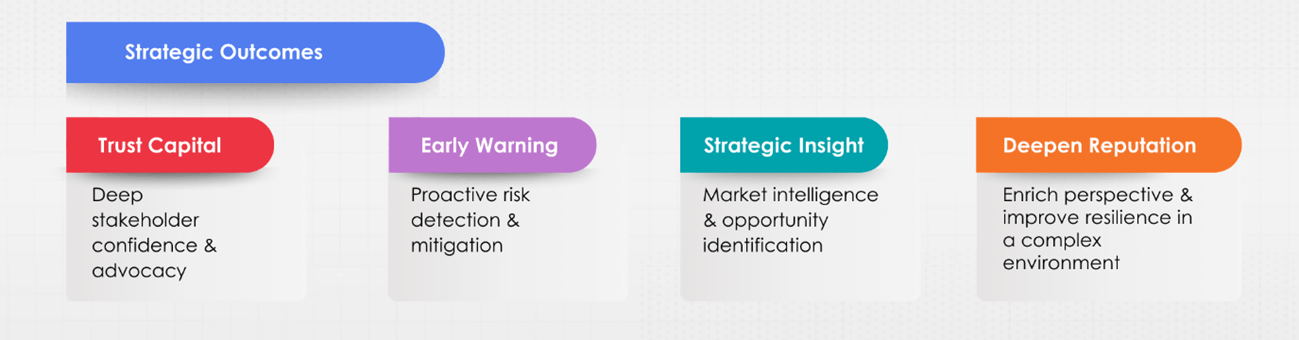
While it is the Board’s responsibility to manage stakeholder trust, it also needs to continue exploring ways to expand its stakeholder base beyond traditional groups, such as customers, investors, and regulatory bodies. The Board needs to engage with a broader ecosystem that includes academia and research institutions, NGOs, start-ups, and even indirect influencers such as digital content creators (bloggers, social media influencers). A wider, more inclusive stakeholder base can enhance reach, enrich perspective, deepen reputation and improve resilience.
The Board must develop ways to understand the diverse needs of local communities, encourage participation, and support community-led initiatives with a positive social and economic impact, thereby strengthening the company’s position as a socially conscious brand.
Conclusion
In today’s complex environment, expanding and nurturing a diverse stakeholder network is no longer optional—it is a strategic imperative. When approached thoughtfully, the stakeholder ecosystem becomes a living asset: a source of insight, advocacy, early warning, and long-term trust.
For Boards, the challenge is not simply to manage stakeholders, but to partner with them, thus building reputational capital that sustains growth, credibility, and relevance in a rapidly changing world.
The article was originally published in the latest issue of Board Stewardship. Here’s the link to the original article: Vol 4: Issue 2: May 2026 – boardstewardship.com

Chairman
Sunil Lulla is the Chairman of Astrum, India’s first research-based strategic communications consulting firm that helps clients successfully negotiate the complex landscape of Reputation, Risk, Regulation & ESG.
Sunil is known for his success in growing sustainable businesses, building enduring brands, and shaping organizational cultures. He brings deep insights into Indian consumers and in managing growth, business, and competitive strategy, mentoring the Promoter/ Next Generation/ CXO. Sunil continues to serve on Boards of listed companies and is very familiar with the governance principles and management of Boards.
For most of his storied career spanning close to four decades, Sunil has been in a leadership position, ensuring profitability, building marketplace success, and driving high employee engagement. These include MTV, SONY, The Times Television Network, Indya.com, HMV, Diageo, Balaji Telefilms, JWT, GREY group and BARC. He is the Chief Evangelist of The Linus Adventures, an advisory service focused on enabling businesses to compete, grow their brand and build their culture.