


Why great consultants have never mattered more
The consulting pod has always been built around people – The Four Horsemen
One partner, one manager, two associates. That structure confirmed itself in pitch rooms, project plans, and pop culture. If you watched House of Lies, you saw it play out in dramatic form: the rainmaker who owned the room, the sharp manager who held the work together, and the analysts who turned raw data into something a client could act on.
That pod built modern consulting. And the thing that made it work was never the structure; it was the people inside it.
That hasn’t changed. If anything, it has become truer.
In 2026, the most valuable thing in a consulting firm is still the same as it has always been: a person who understands a problem, earns a client’s trust, and helps them make a better decision than they would have made on their own. No technology has come close to replicating that. None is likely to.
What has changed is the environment around that person. The tools available to a talented consultant today are extraordinary. And the consultants who know how to use them are doing things that would have seemed impossible five years ago, not because they have replaced their judgment with a machine, but because they have freed themselves to use it more.
The Real Question Is Not AI vs. People
There is a version of this conversation that frames AI as a threat to consulting jobs. That framing is wrong, and it misses the point entirely.
AI does not bring judgment to a room. It does not read a client’s hesitation. It does not hold a relationship through a difficult conversation, take accountability for a recommendation, or earn the trust that makes a client call at 9 p.m. to share something they haven’t told anyone else.
Those capabilities are irreducibly human. And as AI handles more of the baseline work, research, synthesis, structure, and drafting, those human capabilities are not becoming less important. They are becoming the only differentiator that cannot be replicated.
The real question is not whether people matter. They do, more than ever. The question is: what are the best consultants doing with the time AI is giving them back?
The Pyramid Isn’t Gone. It’s Operating at Full Capacity.
The old model scaled through headcount. Hours were the currency. Research took time, structuring took time, and building a storyline took time.
AI is not changing who does the work. It is changing how long the foundational work takes and, therefore, what every person on the team has left to do on the work that matters.
Junior consultants who used to spend a week on a competitive landscape now have it done by afternoon and spend the rest of the week making it insightful rather than merely comprehensive. Managers who used to format decks on weekends now refine the recommendation instead. Partners build more relationships because the team behind them is operating at a level that used to require twice as many people.
This is not the pyramid being replaced. It is the pyramid finally running without friction.
The Four Horsemen, Recast
The four horsemen of consulting are no longer just job titles. They are functional capabilities, and the tools that support each one are now accessible to any consultant willing to learn how to use them.
The Scout compresses discovery. Days of desktop research become hours of usable insight. The consultant doesn’t just arrive faster; they arrive better informed.
The Thinking Engine accelerates structure. It generates hypotheses, stress-test arguments, and produces a first draft of the logic. Then the consultant interrogates it, reshapes it, and brings what no machine has: the knowledge that only comes from being in the room. The machine proposes. The consultant decides.
The Storyteller converts reasoning into narrative. It takes consultants from a rough outline to a working storyline in a single session, freeing time for what a deck cannot do: reading the room, anticipating resistance, and landing the recommendation.
The Builder changes what the team can deliver. AI-assisted coding means consultants can now create working tools, trackers, dashboards, automated briefings, and research pipelines without a developer or a sprint cycle. These tools don’t replace the team. They extend it. They produce infrastructure that continues to serve the client long after the engagement ends.
The four horsemen are not a replacement for the consulting team. They are the best support system that the team has ever had.
Why Talent Matters More, Not Less
There is a logic that says, if AI can do the basic work, basic consultants will be replaced. That logic is too simple.
What AI does is raise the floor. The baseline quality of research, structure, and output goes up across the board. That means the things that were already differentiating, the ability to navigate ambiguity, to earn trust in a difficult moment, to see what the data does not show, to make the right call when there is no clear answer, become even more valuable, because they are now the only things left that cannot be replicated.
In that world, a good consultant becomes very good. A great consultant becomes exceptional. The tools do not determine the gap between those two outcomes; the person determines it.
This is why building a strong team matters more in 2026, not less. The firms that will win are those that invest in talent, intentionally develop their people, and create an environment where great consultants can do their best work. The tools amplify whatever is already there. The investment in people is still what determines what gets amplified.
What This Means for How Firms Grow
The structural implications are real and largely positive.
When research, analysis, and narrative work become faster, delivery capacity grows without a linear increase in cost. Teams can take on more work, develop deeper expertise, and spend more time in the conversations that clients value most. Revenue per consultant rises not because fewer people are doing the work, but because more of each person’s work is genuinely high-value.
Firms that build proprietary tools and workflows through their Builder capability also create something no competitor can easily replicate, institutional IP. A workflow built for one engagement becomes a template for the next. A research pipeline becomes a living asset. A scoring model serves as the foundation for a new service line. The team’s intelligence compounds over time.
This also opens new categories of work. Firms that have genuinely embedded AI into their delivery have something real to say when clients come to them with an AI strategy, an operating model redesign, or a workforce transformation. They are not theorising. They are demonstrating.
A More Human Model of Consulting Going Forward
Here is what is most often missed in this conversation – better tools do not make consulting less human. They make it more so.
When the friction and monotony of research, drafting, and formatting are reduced, what remains is the work only people can do. More time thinking and more time listening. More time in the hard conversations that move things. More time building relationships that outlast any single engagement.
The firms that get this right will not just keep pace with the changes ahead. They will grow faster because of them, because they invested in the one thing AI cannot replicate.
People who are genuinely excellent at what they do, and who now have the tools to prove it.
The future of consulting is not fewer people doing more with machines.
It is the same great people, doing the best work of their careers, with less in the way.
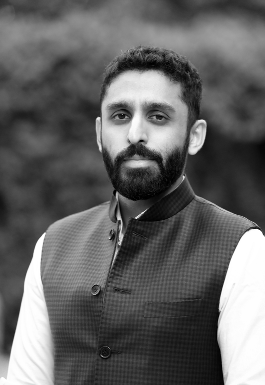
Principal
Aditya has nearly a decade of experience in ESG consulting Transformation and Communications. He began his career with a multi-year stint in the office of the Sh. Piyush Goyal, a senior minister in the cabinet of Prime Minister Modi and subsequently in PwC and ERM, as a part of their ESG consulting practice.
Aditya excels in collaborating with his clients to initiate ESG transformation and integrate ESG strategy into business outcomes. He is also experienced in developing impact assessment reports highlighting value creation across People, Planet, and Profit.
Aditya holds an M.A. (Economics and Geography) from the University of Aberdeen and an M.Sc. Environmental Economics from the London School of Economics and Political Science (LSE).